
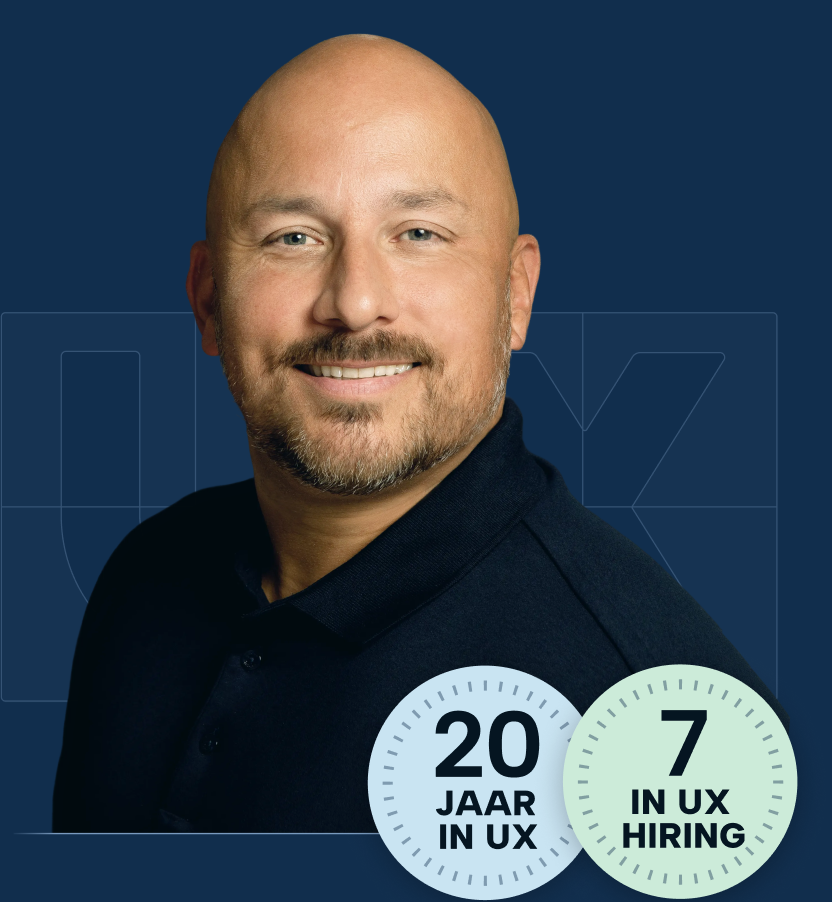
Roy van Balen
20 years in UX
Lots of candidates. And only a handful are worth your time.
The best don't apply, get overlooked, or drop out before you can hire them.
Sounds harsh, but in 2026 this is the reality for many organisations.
Here's what I've learned when it comes to hiring high performers in UX:
1. They don't apply. Because they don't recognize themselves in generic vacancies.
2. They are overlooked. Because recruiters are not equipped to screen UX profiles.
3. They are mistakenly rejected. Because recruiters are not equipped to qualify UX professionals.
4. They drop out before you speak to them. Because the process is too slow when recruiters have to process a lot of candidates.
5. They feel undervalued. Because the response time does not meet their expectations.
6. They loose interest. When the role appears to be shifting, because the story was not clear enough in the early stages.
7. They get scooped by others. While recruiters and managers are occupied with the pile of low-quality candidates
8. ...
The full list includes 21 drop-off points.
Recruiters are not the cause of this.
Neither did hiring managers.
The problem is the recruiter-first setup.
UX professionals have a complex, multidisciplinary and strategic role. They combine research, psychology, product strategy and design skills. It takes years of experience in UX to reliably screen, select and qualify UX professionals.
Recruiters usually have no experience in UX.
The result is lots of low-quality candidates. And while you two are busy handling them, the best ones are disappearing from the pipeline.
Recruitment becomes your second job.
When organisations call me in, this changes.
I have 20 years of experience in UX and 6 years in UX talent acquisition.
I take over the workload of the recruiter and the hiring manager in one go.
Sourcing, screening, selection, qualification, scheduling interviews, follow-up, rejections.
This means that most of those 21 drop-off points disappear.
Instead of a stack of resumes, the hiring manager gets one strong candidate at a time.
They usually hire the 1st candidate, sometimes the 2nd. Very rarely does it come down to 3rd.
1. Recruiters have more time for non-UX roles.
2. Managers have more time and headspace for other goals.
3. The organisation hires stronger UX professionals.
4. Teams achieve better results.
In this way, I've helped more than 300 organizations.
Would you like to get acquainted to see if this suits your organisation?
Then book a UX hiring call for us.
Sincerely,
Roy
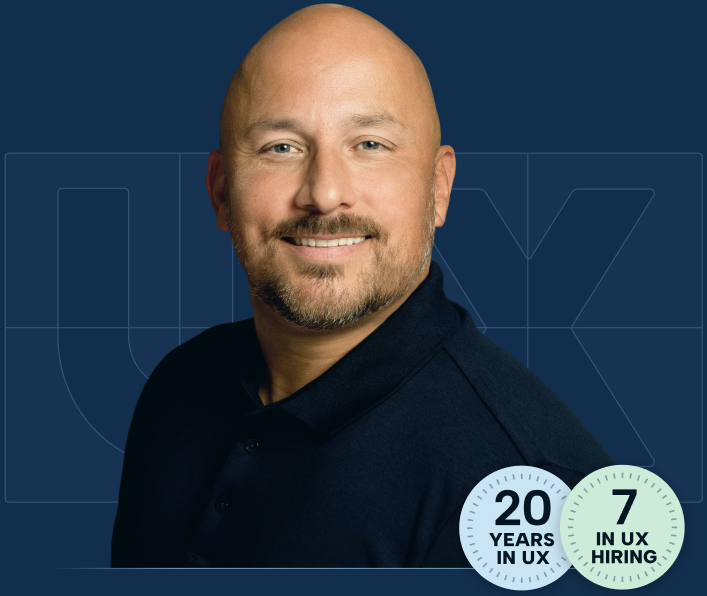
Roy van Balen
20 years in UX
Lots of candidates. But only a handful are worth your time.
Hier leerde ik:
- Dat het kunnen bereiken, herkennen en beoordelen van UX-talent diepgaande kennis van het vakgebied vereist.
- Dat traditionele recruiters hier helaas niet voor geëquipeerd zijn omdat zijn omdat zij onvoldoende kennis hebben van UX-processen, -principes en -rollen.
- Dat dit, naast een lang en stressvol wervingsproces voor zowel de hiring manager als de recruiter, allerlei financiële gevolgen heeft.
Zo kost een scrum team al snel 40.000 euro per 3 wekelijkse sprint. Er gaan meer dan 15 sprints in een jaar, dus één 10% minder effectief ontwerpende UX designer kost de organisatie ieder jaar dat de UX designer in dienst is 60.000 euro extra.
De meeste UX designers zitten wat effectief ontwerpen betreft op 60 a 65% van wat er mogelijk is.
Dat is één van de redenen waarom ik Found UX ben gestart.
Als je Found UX inschakelt, werf ik persoonlijk high-performers voor je, terwijl jij ongestoord doorwerkt.
Sinds 2019 heb ik meer dan 300 UX en Product leaders geholpen.
Lijkt het je interessant om eens kennis te maken en/of over UX hiring te praten?
Boek dan een UX hiring call. Ik vertel je graag meer over mijn unieke aanpak, en leer daarbij ook graag jouw situatie kennen.
Vriendelijke groet,
Roy



















.jpg)


